Our Research Methodology
Independent, data-driven research built on surveys, executive interviews, field intelligence, and real-world testing.
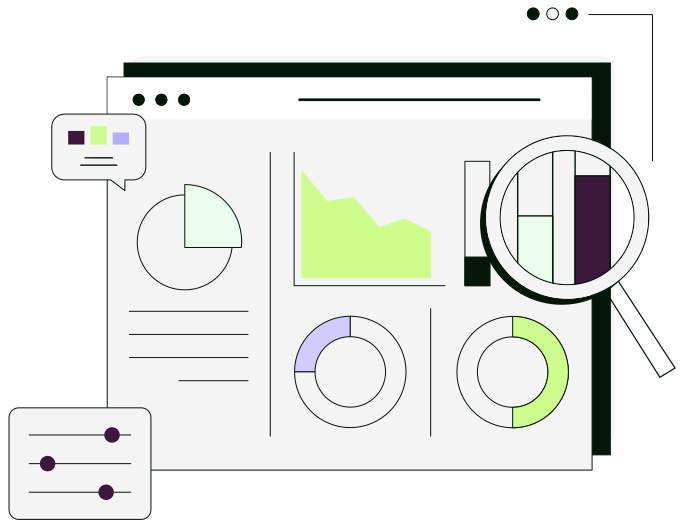
Research Framework
A Structured Model Built on Four Stages
Our research moves through a repeatable process — from landscape analysis through validation and into published intelligence. Each stage builds on the last to ensure rigor and defensibility.

Market Mapping
We begin each research cycle by defining the category, mapping the vendor landscape, and sizing relevant segments. This establishes the boundaries and scope of every evaluation.

Data Collection
Primary and secondary data is gathered through four complementary methods — combining quantitative signals with qualitative depth to capture both strategic intent and real-world execution.
Statistically grounded market signals on adoption, investment priorities, and satisfaction.
Workflow scorecards validating how processes function inside distribution centers, retail stores, and fulfillment operations.
Qualitative depth around decision drivers, organizational constraints, and transformation lessons.
End-to-end evaluation of omni-channel capabilities under real transaction scenarios.

Comparative Evaluation
Collected data is analyzed through feature benchmarking, capability scoring, adoption metrics, and performance indicators — producing a structured, comparable view across vendors.

Validation & Publication
Before publication, all findings pass through operator validation panels and advisory review, followed by a structured editorial process to ensure accuracy and defensibility.

Results
Actionable Intelligence for Decision-Makers
Every research cycle is designed to move beyond vendor narratives and surface what actually matters in production environments.
Findings are derived through data triangulation across all four collection methods, ensuring that no single source determines outcomes. Insights are normalized across peer cohorts and assessed against predefined criteria.
The result is a defensible, execution-grounded view of market maturity that reflects operational reality — not marketing narratives.

Objective Vendor Comparisons
Side-by-side assessments free from vendor influence

Defined Category Boundaries
Clear scope for every technology segment we evaluate

Transparent Evaluation Criteria
Published methodology readers can assess independently

Deployment-Informed Insights
Analysis shaped by real implementation experience

Reduced Decision Risk
Structured intelligence that minimizes selection uncertainty
Assessment Criteria

Research Independence Policy
Our credibility depends on strict independence — from how we fund our work to how we evaluate vendors.
Assessment Criteria
Vendor Neutrality
We do not accept vendor funding, advertising, or sponsorships. Our research is funded entirely by the organizations that consume it. Evaluation criteria are vendor-agnostic and applied uniformly.

Research Transparency
We document our methodology, define category boundaries, and publish evaluation criteria so that readers can assess our work on its own merits. Anonymized participation and standardized scoring protect integrity.
Sponsored Content Policy
No pay-to-play rankings. No hidden incentives. No sponsored scoring. If content is supported by a third party in any way, it is clearly disclosed — though this has never applied to our core research.

Frequently asked questions
Didn’t find what you were looking for? Reach out to us support@supplychainresearch.com
General
Supply Chain Research (SCR) is an independent research platform built for supply chain professionals. The platform provides access to one of the largest curated supply chain knowledge bases in the world, covering everything from warehouse operations and transportation management to procurement, inventory planning, and supply chain strategy. The goal is simple: make deep, reliable supply chain knowledge accessible to everyone in the industry.
SCR serves working professionals across the supply chain. Directors of operations, supply chain analysts, logistics managers, procurement leads, consultants, and certification candidates all use the platform. Whether you are researching a technology decision, building a business case, or studying for APICS certification, SCR is designed to give you answers grounded in real research rather than surface-level content.
We use a four-pillar approach combining quantitative industry surveys, in-depth executive interviews, structured field market intelligence, and controlled mystery shop assessments. Each method captures a different dimension of the market — from strategic intent to real-world execution.
Most supply chain content online falls into one of three categories: vendor marketing disguised as thought leadership, expensive analyst reports locked behind five-figure subscriptions, or blog posts that barely scratch the surface. SCR exists in the gap between those options. The platform is built on thousands of curated textbooks, research papers, and industry publications. It is vendor-neutral (SCR does not sell software and never will), and the intent is to share as much of this knowledge as possible with the broader supply chain community.
No. SCR is completely independent. The platform does not sell, resell, or promote any specific supply chain software. Research and analysis on the site evaluate technologies and vendors on the same dimensions, without bias. That independence is core to everything SCR publishes.
The Knowledge Base
The knowledge base contains over 10,000 textbooks, research papers, analyst reports, and industry publications covering the full spectrum of supply chain management. That includes warehouse management, transportation, order management, procurement, demand planning, inventory optimization, supply chain network design, and more. The platform has also extracted over 600,000 figures, charts, and diagrams from these sources, all searchable alongside the text.
SCR curates from academic publishers, industry research firms, professional associations, and neutral third-party sources. The platform does not include vendor-produced marketing materials in the core knowledge base. Every source is selected for depth, rigor, and relevance to working practitioners.
The knowledge base includes both foundational works (the textbooks and frameworks that define the field) and recent publications. New research is added on an ongoing basis. For breaking industry developments, the SCR editorial team publishes original analysis that connects current events to the deeper research in the corpus.
AI-Powered Search
SCR's AI search is built on top of the curated knowledge base. When you ask a question, the system retrieves relevant passages from thousands of indexed sources and generates an answer grounded in that material. Every response includes citations to specific sources so you can verify the information and read further.
General-purpose AI models are trained on broad internet data. They can give you a reasonable-sounding answer to a supply chain question, but they cannot tell you where that answer came from, and they are prone to generating plausible but incorrect information. SCR's AI searches a curated, domain-specific corpus and cites its sources. The difference is the same as the difference between asking a colleague who "thinks they remember" and checking the actual textbook.
Every AI-generated response on SCR includes source citations. The system is designed to surface what the research actually says rather than generate generic responses. That said, AI search is a tool for accelerating research, not a replacement for professional judgment. The citations are there so you can verify and go deeper.
Content and Research
SCR publishes original research articles, vendor-neutral technology analysis, benchmark data, framework comparisons, and industry trend reports. All published content follows the same standard: claims are supported by citations, vendor evaluations are balanced, and the focus is on practical value for working professionals.
Yes. The knowledge base covers the core body of knowledge for major supply chain certifications. The AI search can help you find explanations, frameworks, and practice scenarios across the full range of certification topics. Several of the foundational textbooks referenced in APICS and ASCM curricula are indexed in the corpus.
SCR is focused on maintaining editorial independence and research quality. If you are a practitioner or researcher interested in contributing, reach out to the team directly. All published content goes through editorial review to ensure it meets the platform's standards for rigor and neutrality.
Access and Getting Started
SCR's intent is to share as much research and knowledge as possible with the supply chain community. Published articles, research reports, and a significant portion of the knowledge base are freely accessible. The platform is built on the belief that better access to quality research makes the entire industry stronger.
Visit supplychainresearch.com and start exploring. You can browse published research, search the knowledge base, and access the AI-powered search tool. No lengthy onboarding required. If you have a supply chain question, ask it.
Subscribe to the SCR weekly newsletter. Each edition covers the most important developments in supply chain, with citations and context you will not find in a typical industry roundup.
Our Latest Insights

Stay Ahead of Supply Chain Innovation
Thank you for your submission!

Research

Vendors
Company